Augmentative and Alternative Communication (AAC)
Any method, tool, or strategy that helps a person communicate effectively when speech is limited or not accessible in a given moment. AAC supports are multimodal, always available and always honored

Visuals / Picture Cues

Body Language
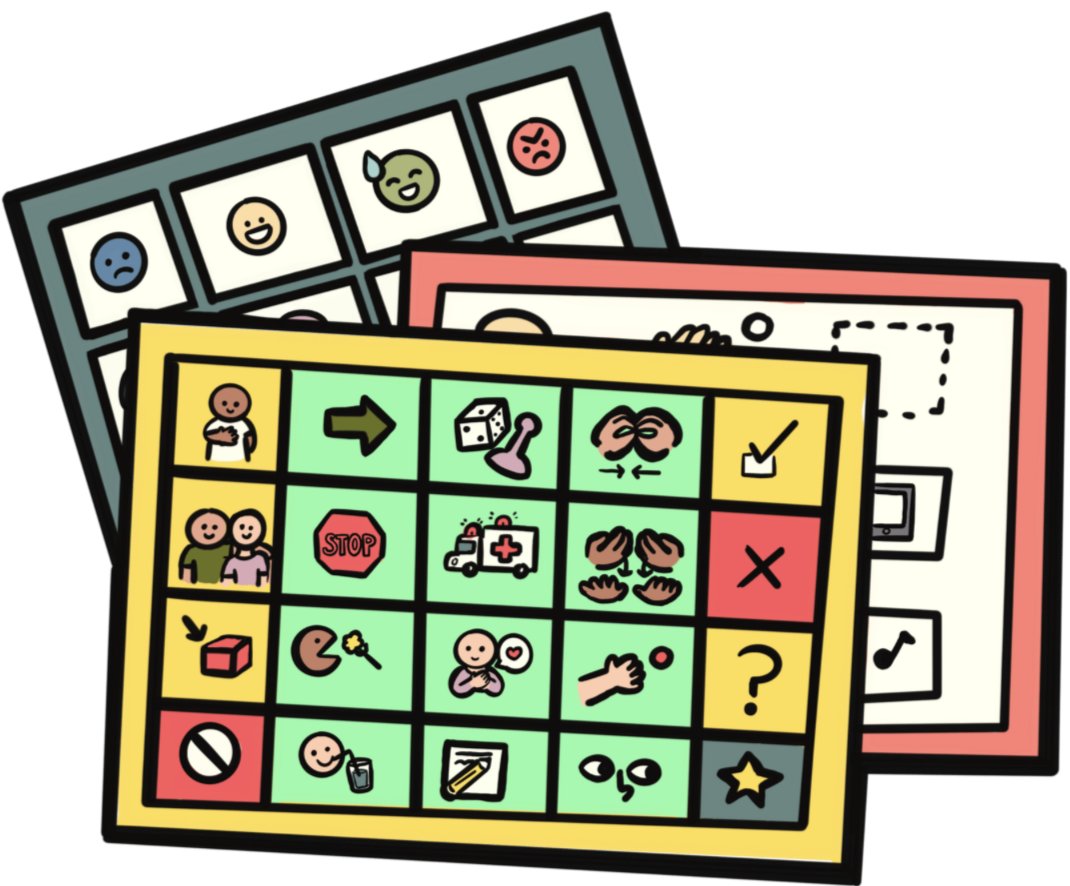
Core Boards

Gestures
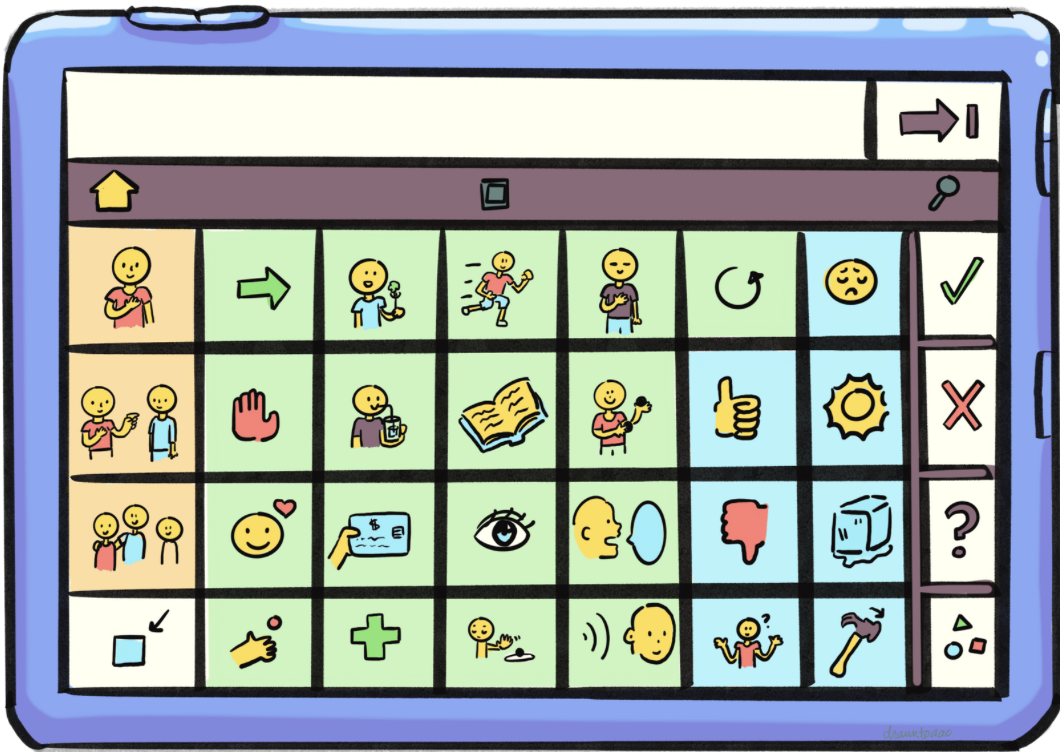
iPads / Tablets
AAC for All Ages
Augmentative and Alternative Communication (AAC) empowers both children and adults to communicate more effectively, confidently, and independently.
For children, AAC supports early communication skills, social interaction, and language development in a fun, engaging way.
For adults, AAC provides practical tools to express needs, participate in daily life, and maintain meaningful social connections. Across all ages, AAC is most effective when paired with personalized strategies, coaching, and consistent support, helping individuals thrive in home, school, and community settings.
-
Focus: Functional communication for daily life, work, relationships, and independence.
Approach: Task-focused, context-driven, and goal-oriented. Adults may already have established communication patterns or needs.
Support system: Often smaller, more independent; may include family, caregivers, or colleagues. Emphasis is on autonomy and privacy.
Device selection: Prioritizes speed, portability, personalization, and compatibility with work or social environments.
-
Focus: Building foundational communication skills, exploring symbols, and supporting social-emotional development.
Approach: Often play-based, highly visual, and caregiver-involved. Children are learning to express wants, needs, feelings, and early social communication.
Support system: Parents, teachers, and therapists play a big role in modeling, prompting, and reinforcing AAC use.
Device selection: May prioritize durability, touch access, and symbol-based systems that grow with the child.
Visit the AAC corner for more resources!